
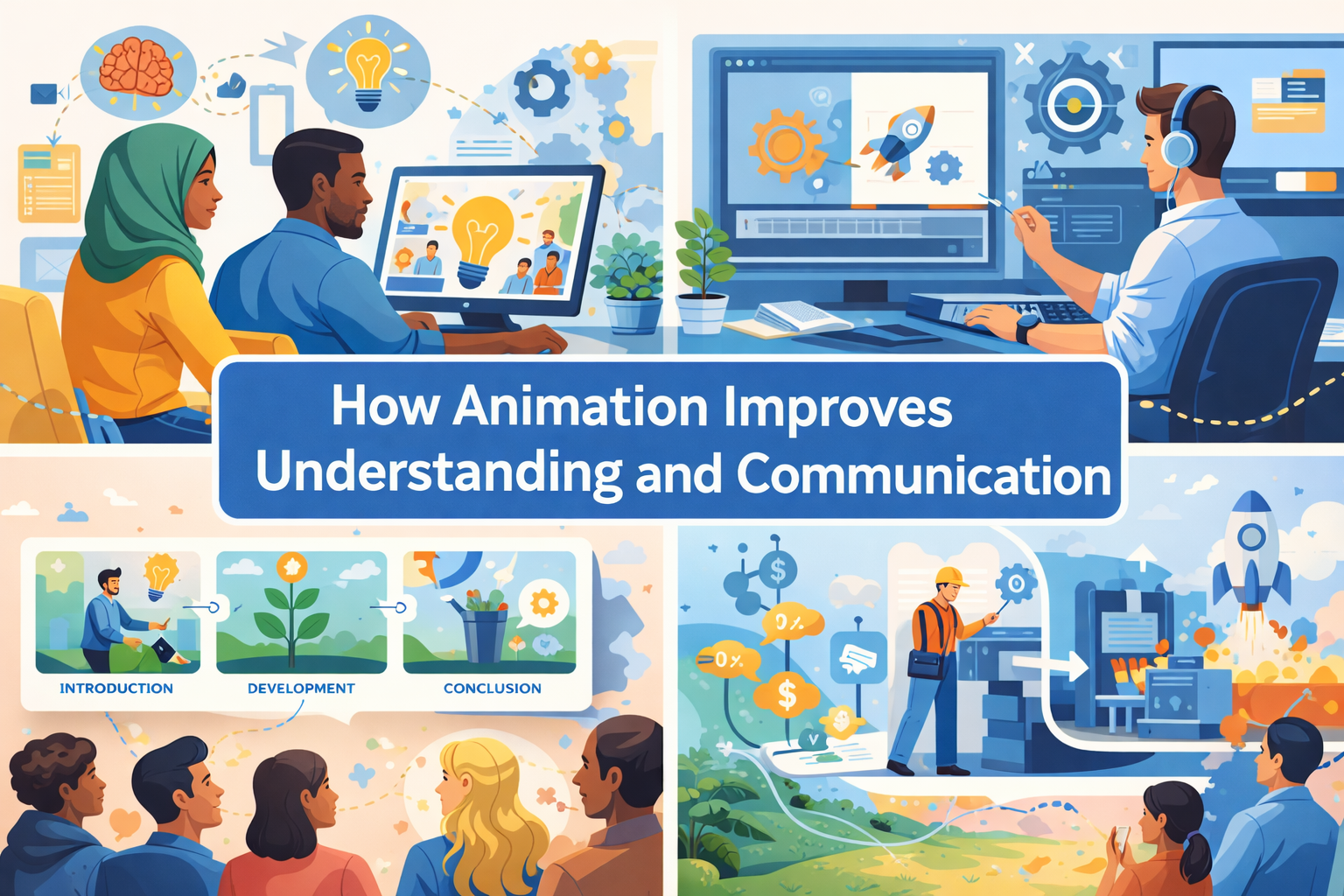
Clear communication is no longer just about choosing the right words. In a digital environment filled with constant information, people increasingly rely on visuals to understand, remember, and engage with content. Animation has emerged as one of the most effective ways to present ideas because it combines structure, motion, and storytelling into a single, easy-to-consume format.
Animation works because it mirrors how people naturally process information. Instead of scanning large amounts of text or interpreting static visuals, viewers are guided through ideas step by step. With access to an animation creator, individuals and organizations can now turn complex messages into clear visual narratives without needing advanced technical expertise.
This shift has made animation a practical communication skill rather than a specialized one. It is now widely used in education, internal communication, digital content, and knowledge sharing-anywhere clarity and engagement matter.
How Animation Improves Understanding
One of the biggest advantages of animation is its ability to control the flow of information. Rather than presenting everything at once, animation reveals content gradually, allowing viewers to focus on one idea at a time.
This approach helps by:
- Reducing cognitive overload
- Highlighting key points visually
- Creating a logical progression of ideas
- Supporting faster comprehension
When information is structured visually, audiences spend less effort trying to interpret meaning and more time understanding the message itself.
Turning Information into Visual Narratives
Information becomes more memorable when it is presented as a story. Animation naturally supports storytelling by connecting ideas through motion and sequencing.
A strong animated narrative typically includes:
- A clear introduction that sets context
- A logical development of ideas
- Visual transitions that connect concepts
- A concise conclusion or takeaway
This narrative structure helps viewers follow the message effortlessly, even when the topic is complex or unfamiliar.
Making Complex Topics Accessible
Some topics are difficult to explain using text alone. Processes, systems, timelines, and abstract ideas often require mental visualization, which can be challenging for many audiences. Animation removes this barrier by showing how things work rather than describing them.
Animation is particularly effective for:
- Explaining workflows and processes
- Demonstrating cause-and-effect relationships
- Visualizing changes over time
- Breaking down abstract concepts
By making ideas visible, animation reduces confusion and improves overall understanding.
Supporting Different Learning Styles
People absorb information in different ways. Some prefer reading, others listening, and many understand best through visuals. Animation combines multiple learning modes into a single format.
Animated content supports:
- Visual learners through imagery and motion
- Auditory learners through narration
- Sequential learners through structured pacing
This inclusivity makes animation especially valuable in educational and training environments.
Increasing Engagement Without Distraction
Engagement does not come from excessive effects-it comes from purposeful design. Effective animation uses motion to emphasize meaning, not to distract.
Well-designed animated content:
- Uses movement to guide attention
- Maintains visual consistency
- Avoids unnecessary elements
- Keeps the message clear and focused
This balance ensures viewers remain engaged without feeling overwhelmed.
Improving Retention and Recall
Understanding information is only part of effective communication. Retention matters just as much. Animation improves memory by pairing visuals with structured sequencing.
Animated explanations are easier to remember because:
- Visual cues reinforce key points
- Motion strengthens recall
- Logical flow aids long-term memory
As a result, audiences are more likely to remember and apply what they’ve learned.
Saving Time for Both Creators and Audiences
Time efficiency benefits everyone involved. Creators save time by delivering clear explanations once, while audiences save time by understanding faster.
A short animated video can:
- Replace lengthy explanations
- Reduce follow-up questions
- Communicate key ideas quickly
This makes animation especially useful in environments where attention and time are limited.
Maintaining Consistency Across Communication
Consistency builds trust and reduces confusion. Animated content helps standardize explanations so that the same message is delivered clearly every time.
This is particularly useful for:
- Training and onboarding
- Educational materials
- Internal communication
- Repeated explanations
Consistent delivery ensures everyone receives the same information in the same way.
Reusing Animated Content Over Time
Animated content has long-term value because it can be reused and adapted easily. Once created, it can serve multiple purposes without starting from scratch.
Reusable use cases include:
- Presentations and briefings
- Learning resources
- Internal documentation
- Digital content libraries
This reusability makes animation a sustainable communication strategy.
Why Animation Fits Modern Communication Needs
Modern audiences expect clarity, speed, and accessibility. Animation meets these expectations by presenting information visually, logically, and efficiently.
Its strengths include:
- Clear structure
- High engagement
- Strong retention
- Long-term usability
These qualities make animation one of the most effective formats for modern communication challenges.
Conclusion: Why Animation Is a Valuable Communication Skill
Animation has become essential because it aligns with how people learn and process information. It simplifies complexity, improves understanding, and enhances retention. With an animation creator, communicators can focus on delivering meaningful messages instead of struggling with format limitations.
Whether used for education, explanation, or information sharing, animation provides a powerful way to communicate ideas clearly and effectively. As digital communication continues to evolve, animation remains a reliable and impactful solution.







Leave a Reply