
Introduction: More Than Just a Sandwich
Subway, a global fast-food giant, has long been synonymous with customizable sandwiches, particularly its iconic Footlong. For decades, the concept of a freshly made, generously sized sandwich has appealed to millions. However, the question that frequently arises for many consumers is: “What is the current Subway Footlong cost?” The answer, as many loyal customers have discovered, is far from simple. The days of a universal “$5 Footlong” are a distant memory, replaced by a dynamic pricing structure influenced by a myriad of factors, from geographical location to specific sandwich choices and ongoing promotions. This comprehensive guide delves into the intricacies of Subway Footlong pricing in 2025-2026, exploring the elements that contribute to its variability and offering insights into how consumers can navigate the menu to find the best value.
Understanding Current Subway Footlong Prices (2025-2026)
As of early 2025 and looking into 2026, the price of a Subway Footlong cost sandwich can vary significantly. Generally, customers can expect to pay anywhere from $10.99 to $15.99 for a basic Footlong, depending on the region and the specific type of sandwich chosen . This range reflects the premium placed on certain ingredients and the operational costs associated with different franchise locations.
For instance, popular choices like the Turkey Breast Footlong might be priced around $9.49 to $10.49, while a classic Italian B.M.T. Footlong could range from $9.99 to $11.49. Even more budget-friendly options, such as the Meatball Marinara, can be found for approximately $8.99 to $9.99 for a Footlong, or $6.49 for a 6-inch version . These figures are indicative and serve as a general guideline, as actual prices are subject to change and local variations.
Subway has also introduced new menu items and promotions that impact pricing. For example, the “Meal of the Day” promotion in early 2025 offered a Footlong for $9.99, often bundled with a choice of cookies or chips . Additionally, the introduction of “Sidekicks” like the Footlong Cookie, priced around $5.00, and various Dippers (Pepperoni & Cheese, Chicken & Cheese, Double Cheese) at approximately $3.00 each, provides alternative price points for consumers looking for smaller bites or add-ons .
The Impact of Location: Why Prices Vary
One of the most significant factors contributing to the variability in Subway menu prices is geographical location. It is not uncommon for the same Footlong sandwich to have vastly different prices across states, or even between two stores within the same city . This phenomenon is primarily due to several key factors:
•Franchise Ownership: Subway operates on a franchise model, meaning individual store owners have a degree of autonomy in setting their prices to account for local operating costs, including rent, labor, and ingredient sourcing.
•Cost of Living: Areas with a higher cost of living, such as major metropolitan centers like New York City or Los Angeles, typically have higher sandwich prices to offset increased overheads.
•Local Competition: Pricing strategies can also be influenced by the competitive landscape. In areas with numerous fast-food options, Subway franchises might adjust prices to remain competitive.
•Specialty Locations: Locations such as airports, train stations, and tourist destinations often feature higher prices due to captive audiences and increased operational expenses.
Reports from customers highlight these discrepancies, with some noting a $3-$4 difference for the same Spicy Italian Footlong between nearby locations . States like Texas and Illinois have been identified as having some of the cheapest Subway subs, while prices tend to be higher in other regions . This regional disparity underscores the importance of checking local store menus for the most accurate pricing information.
Navigating Promotions and Deals: Finding the Best Value
Despite the rising costs, Subway frequently offers promotions and deals that can significantly reduce the Subway Footlong cost. Savvy consumers can leverage these offers to enjoy their favorite sandwiches without breaking the bank. Common promotions include:
•Buy One Get One (BOGO) 50% Off: This popular deal allows customers to purchase one Footlong and get a second at half price. These offers are often available through the Subway app or online ordering platforms, requiring a specific coupon code .
•Two Footlongs for a Set Price: Deals such as “2 Footlong Subs for $13.99” are frequently advertised, providing a substantial saving when purchasing multiple sandwiches .
•Subway Rewards Program: The Subway Rewards program is designed to reward loyal customers. While the “every 4th Footlong is FREE” benefit is slated to be discontinued as of April 1, 2026, the program continues to offer points for purchases, which can then be redeemed for discounts or free items . Joining the rewards program and utilizing the mobile app are excellent ways to stay informed about exclusive deals and earn rewards.
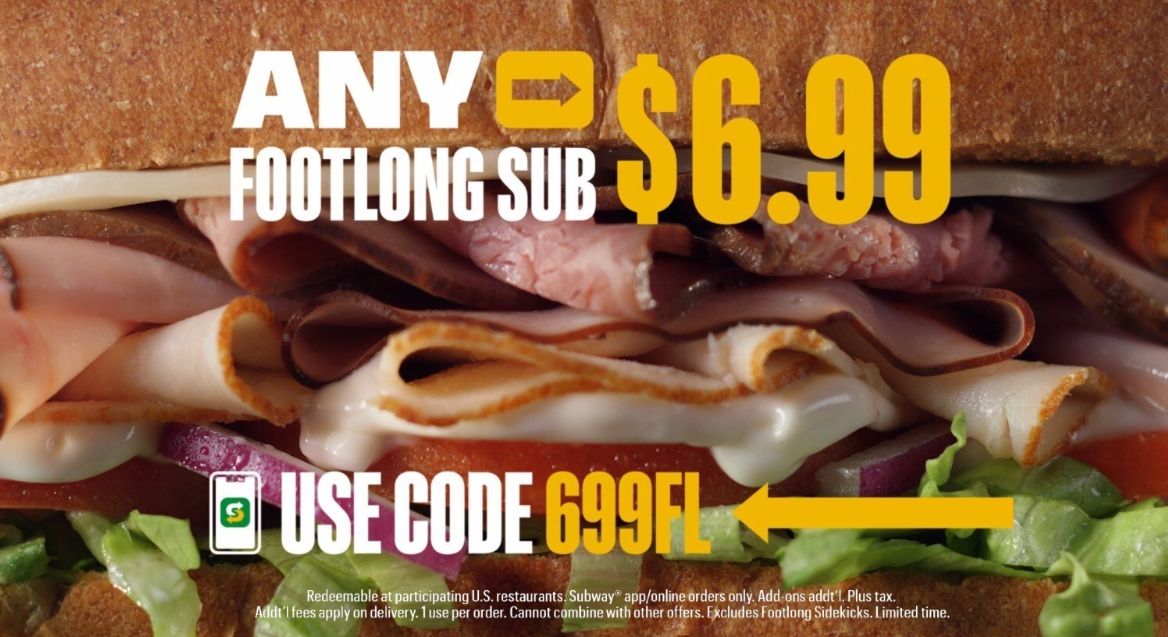
•App-Exclusive Deals: The Subway mobile app often features exclusive discounts, such as a Footlong for $6.99, making it a valuable tool for budget-conscious diners.
Staying updated on these promotions requires checking the official Subway website, subscribing to their newsletters, and regularly checking the mobile app. These deals are crucial for making the Subway Footlong cost more accessible.
The “$5 Footlong” Era: A Look Back
No discussion about Subway Footlong cost would be complete without acknowledging the legendary “$5 Footlong” campaign. Launched in 2008, this promotion became an instant sensation, transforming Subway
into a household name and significantly boosting its sales. The simplicity and perceived value of a $5 Footlong resonated deeply with consumers, especially during an economic downturn .
However, the golden age of the $5 Footlong was not sustainable in the long term. Rising ingredient costs, increasing labor expenses, and inflation gradually eroded the profitability of such a low price point. By 2012, the promotion began to phase out, and while Subway occasionally brought back similar deals, they were often for a limited time or applied to specific, less premium sandwiches. The discontinuation of the consistent $5 Footlong marked a significant shift in Subway’s pricing strategy, moving towards a more dynamic model that better reflects the economic realities of the fast-food industry.
Factors Influencing Subway Footlong Price Changes
The evolution of Subway Footlong prices is a complex interplay of various economic and operational factors. Understanding these elements provides insight into why the cost of your favorite sandwich has changed over time and why it continues to fluctuate:
1. Ingredient Costs
The price of raw materials, such as bread, meats, cheeses, and fresh vegetables, is a primary driver of sandwich costs. Global supply chain disruptions, weather events impacting crop yields, and fluctuations in commodity markets can all lead to increased ingredient expenses for Subway. As these costs rise, they are often passed on to the consumer, either directly through higher menu prices or indirectly through smaller portion sizes or changes in promotional offers.
2. Labor Costs
Minimum wage increases, rising healthcare costs, and a competitive job market contribute to higher labor expenses for Subway franchisees. To maintain profitability, these increased operational costs are factored into the pricing of menu items, including the Footlong sandwiches.
3. Inflation
Inflation, the general increase in prices and fall in the purchasing value of money, affects nearly every aspect of the economy. As the cost of doing business rises across the board, from utilities to marketing, Subway, like other businesses, adjusts its prices to keep pace with inflationary pressures.
4. Franchisee Autonomy and Local Market Conditions
As previously mentioned, Subway’s franchise model grants individual owners the flexibility to set their prices. This autonomy allows them to respond to local market conditions, including competition, consumer demand, and specific operating costs unique to their location. This is a key reason for the noticeable Subway price variations seen across different regions.
5. Menu Innovation and Premium Ingredients
Subway continuously introduces new menu items and limited-time offers, often featuring premium ingredients or unique flavor combinations. These innovative offerings, while appealing to customers, typically come with a higher price point due to the specialized nature or increased cost of their components. The
introduction of the “Subway Series” in recent years, featuring chef-inspired creations, is an example of this trend, offering customers new options at varying price points.
Maximizing Value: Tips for Saving on Your Subway Footlong
Given the fluctuating Subway Footlong cost, consumers can employ several strategies to ensure they are getting the best possible value for their money:
1.Utilize the Subway App and Rewards Program: This is arguably the most effective way to save. The app frequently offers exclusive deals, discounts, and BOGO offers. The rewards program allows you to earn points on every purchase, which can be redeemed for free food. Make sure to check the app before placing an order .
2.Look for Local Promotions: Many individual Subway franchises run their own local deals. Keep an eye out for in-store signage, local advertisements, or community social media groups that might announce special offers.
3.Consider the “Meal of the Day” or Value Menu Items: If available, these options are often priced more competitively. While the “Meal of the Day” might feature a specific sandwich, it often comes at a reduced Footlong price, sometimes bundled with a drink or side .
4.Compare Prices at Nearby Locations: If you have multiple Subway restaurants in your vicinity, it can be worthwhile to check their prices, especially if you’re a regular customer. As highlighted, prices can differ significantly even within a short distance .
5.Build Your Own on a Budget: While premium ingredients and extra toppings can quickly drive up the cost, opting for classic vegetables and standard cheeses can help keep the price down. Focus on the core sandwich and add only what truly enhances your meal without excessive cost.
6.Take Advantage of Catering Deals: For larger gatherings or office lunches, Subway catering options can sometimes offer better per-Footlong value, especially when ordering platters or bundles.
The Future of Subway Footlong Pricing
The landscape of fast-food pricing is constantly evolving, and Subway is no exception. As the brand continues to innovate its menu, respond to economic pressures, and adapt to consumer preferences, the Subway Footlong cost will likely remain dynamic. The focus appears to be shifting from a single, low price point to offering a range of options that cater to different budgets and tastes, supported by a robust loyalty program and frequent promotional activities.
Subway’s strategy seems to be centered on providing perceived value through customization, fresh ingredients, and targeted deals, rather than relying on a universal low price. This approach allows them to maintain profitability while still attracting a broad customer base.
Frequently Asked Questions (FAQ)
Q1: Why is the Subway Footlong no longer $5?
A1: The iconic “$5 Footlong” promotion was a marketing success but became unsustainable due to rising ingredient costs, increased labor expenses, and general inflation. Subway, like many businesses, had to adjust its pricing to reflect the economic realities and maintain profitability .
Q2: Do all Subway locations have the same prices?
A2: No, prices for Subway Footlongs and other menu items can vary significantly between locations. This is primarily because Subway operates on a franchise model, allowing individual owners to set prices based on local operating costs, competition, and regional economic factors .
Q3: How can I find the cheapest Subway Footlong deals?
A3: The best way to find deals is by using the official Subway mobile app, joining the Subway Rewards program, and checking the Subway website or local store promotions. The app often features exclusive discounts, BOGO offers, and special pricing .
Q4: What are the typical price ranges for a Subway Footlong in 2025-2026?
A4: In 2025-2026, a basic Subway Footlong typically ranges from $10.99 to $15.99, depending on the specific sandwich and location. Some promotional offers might bring the price down to around $9.99 or even $6.99 for certain deals .
Q5: What are Subway Sidekicks?
A5: Subway Sidekicks are newer menu additions designed to complement your meal or serve as smaller treats. They include items like the Footlong Cookie (around $5.00) and various Dippers (around $3.00), offering different price points and options for customers .
Conclusion
The Subway Footlong cost has evolved considerably since its inception, moving from a universally recognized $5 deal to a more nuanced pricing structure. This change is a direct reflection of broader economic trends, including inflation, rising operational costs, and the brand’s strategic shift towards menu innovation and a focus on value through customization and promotions. While the days of a fixed, low price are behind us, understanding the factors that influence pricing and actively seeking out deals through the Subway app and rewards program can empower consumers to continue enjoying their favorite Footlongs without overspending. By staying informed and utilizing available resources, customers can navigate the diverse pricing landscape and find the best Subway Footlong deals that suit their budget and cravings.
Hungry for more? Head over to my website for fresh articles.










Leave a Reply